
In my writing courses, we often explore the structures of both memoirs and novels to enhance our storytelling skills. One of my students, for example, is writing a memoir about her grandmother’s life, blending it with her own reflections about her grandmother’s time and a time in her own life. This kind of dual narrative—past and present intertwined—is ambitious and can be tricky to navigate. To help her, I turned to Wallace Stegner’s Pulitzer Prize-winning Angle of Repose, a novel that skillfully blends timelines and narratives in a way that both novelists and memoirists can learn from.
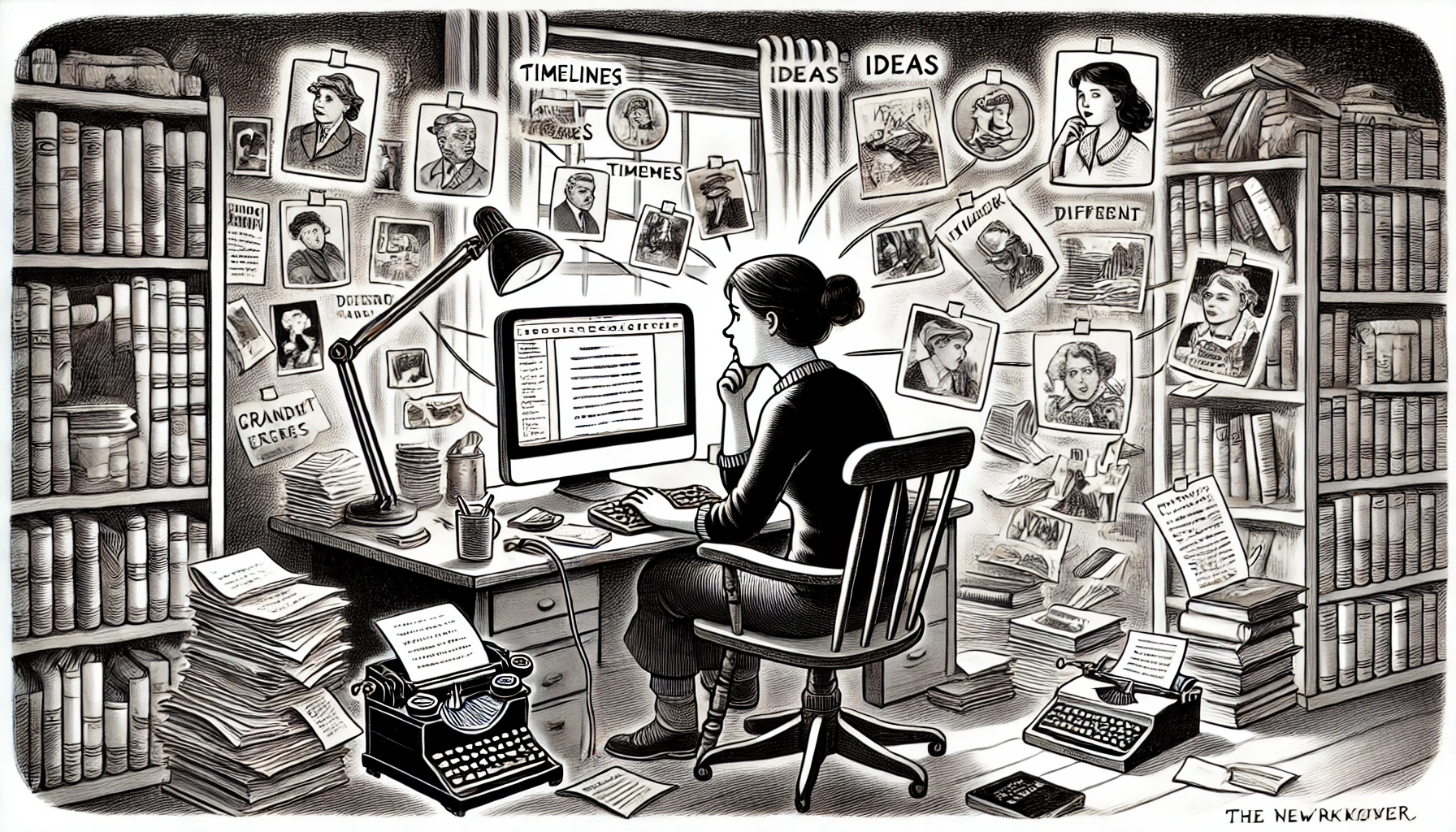
To quickly break down and understand Stegner’s complex structure, I used AI to assist in summarizing and analyzing the novel’s narrative techniques for the class. As always, I find AI a valuable tool to speed up the research and analysis process, especially in the immediate environment of a live class session. In this blog post, I'll share my findings about how Stegner successfully manages multiple timelines and voices that keeps readers from getting lost.
Lessons from Angle of Repose: Blending the past and present
Angle of Repose tells the story of Lyman Ward, a retired historian writing a biography of his grandparents, Susan and Oliver Ward, set in the American West. The novel alternates between Lyman's present-day life and his reconstruction of his grandparents' story through letters and historical documents. This dual narrative technique is particularly relevant for memoirists trying to connect personal history with broader family legacies.
What’s especially interesting about Angle of Repose is that Stegner, with permission from Mary Hallock Foote’s granddaughter, used Foote’s life and letters to propel much of the novel’s historical narrative. Approximately 10% of the novel—around 66 pages out of 555—consists of text drawn directly from Foote's letters. (Despite this, Stegner faced accusations of plagiarism, which many consider unfounded given that he had secured permission and openly acknowledged his sources.)
Key structural techniques Stegner uses
1. Dual Timeline: Stegner moves between Lyman's present-day research and his grandparents’ story in the late 19th century. For memoirists, this is a powerful way to reflect on the past while showing how it impacts your present life. My student, for instance, is using a similar structure to explore her grandmother’s life alongside her own, revealing how her grandmother’s experiences shaped her own path.
2. Frame Narrative: Lyman’s research into his grandparents’ lives forms the frame around the historical story, much like a memoirist reflecting on their research or family discoveries while weaving in personal reflections. This structure allows for a blend of fact, interpretation, and personal insight.
3. Mixed Narrative Voices: Stegner shifts between Lyman’s first-person account and third-person storytelling for his grandparents’ story. This mix of narrative voices adds depth and variety, which memoirists can replicate by using both intimate, reflective first-person accounts and more distant, objective third-person narration when describing family history.
4. Non-linear Storytelling: Stegner doesn't present his story in a strictly chronological order. The past is revealed in fragments, as Lyman uncovers it. For memoirists, this non-linear approach can create suspense and gradually deepen the reader’s understanding of both past events and their current relevance.
5. Epistolary Elements: Using Foote’s actual letters gives the historical sections of Angle of Repose an authenticity that memoirists can replicate by incorporating letters, journals, or other documents. These artifacts help ground the narrative in reality and offer different perspectives on the events being described.
6. Metafictional Commentary: Throughout the novel, Lyman reflects on the process of writing his grandparents’ story and, in doing so, explores the challenges of interpreting the past. Memoirists can take a similar approach, reflecting on how writing their story influences their understanding of their own life and family.
If you didn't know terms like "epistolary elements" and "metafictional commentary," you're not alone! Now we're all equipped to be conscious of these techniques, identify them, and discuss them.
Keeping a detailed timeline and outline is important
Obviously, keeping a detailed timeline and outline is important in your writing process.
1. Clarity for You as a Writer
When you're dealing with multiple timelines, it's easy to lose track of the sequence of events. A detailed timeline helps you keep straight what happens when—both in your own life and in the past. This ensures you don’t accidentally create inconsistencies, like mentioning something that hasn't happened yet or forgetting key historical details.
2. Consistency for Your Readers
Readers need clear cues to follow the shifts in time and place, especially when you're jumping between the past and present. Keeping a timeline will help you plant those necessary narrative signals—like changes in verb tense, dates, or transitional phrases—so your readers stay grounded in the story and don’t get confused about where they are.
3. Managing Flashbacks and Multiple Perspectives
If you're incorporating flashbacks or writing from multiple perspectives, a timeline will help you determine the best points to introduce past events and maintain a logical flow. It allows you to structure your narrative in a way that builds suspense or reveals information gradually, while keeping everything cohesive.
4. Maintaining Thematic Connections
Weaving together the past and present can create powerful parallels between different generations, but only if those connections are intentional. An outline helps you map out how themes, symbols, or events in the past resonate with the present, and ensures you're not missing opportunities to strengthen these ties across timelines.
5. Organizing Your Scenes and Chapters
An outline that details each chapter’s content ensures that each scene serves a purpose in the overall story. Whether it’s a personal revelation in the present or a key event from your subject’s past, outlining allows you to see how the chapters are building toward your memoir's key themes and resolutions.
6. Flexibility While Writing
Having an outline doesn't mean you’re locked into a rigid structure. Instead, it gives you the freedom to explore your story while knowing how the pieces fit together. If you discover new ideas as you write, you can adjust the timeline and outline to accommodate those discoveries without derailing the overall narrative.
How to create a timeline and outline for your memoir
At this point, you may be asking yourself, "How in the world do I keep track of all these elements?"
- Start with key events: List the major events in both timelines. For a memoir about you and your grandmother, this might include important milestones in both of your lives.
- Plot relationships: Identify how certain events in your past or present relate to your grandparent’s story. This helps you weave connections between timelines.
- Scene-by-scene outline: Write a brief description of what happens in each chapter or scene, noting the setting, time period, and characters involved. This will help you visualize the flow and balance between past and present.
- Use visual aids: Consider using a tool like a timeline or even a storyboard to keep track of your structure visually. Some writers use spreadsheets or software like Scrivener to keep everything organized
Keeping a detailed timeline and outline will not only make writing easier, but it will also enhance your reader's experience by creating a clear, cohesive, and compelling narrative across multiple timelines.
The challenge of writing about writing
My student’s memoir is particularly ambitious because she is not only writing about her grandmother’s life, but also reflecting on her own present-day experiences as a writer—essentially writing about writing. This technique, though powerful, can be complex and requires careful attention to structure. It’s easy to confuse readers when you’re juggling multiple timelines, perspectives, and the act of writing itself.
One key to keeping readers grounded is paying close attention to verb tense and narrative clues. Whether you're writing about the past, the present, or your subject’s past, you need to provide clear signals to your reader about where they are in time. Transitions, tense shifts, and contextual markers are crucial for helping readers follow the narrative without getting lost.
Memoirists, read novels!
For memoirists, reading novels is just as important as reading memoirs. Novels like Stegner's Angle of Repose are packed with narrative techniques that can elevate your storytelling. By studying novelists, we can learn how to create vivid scenes, develop strong characters, and balance multiple timelines—all of which are essential to memoir writing.
The best memoirs often read like novels, with engaging characters, rich scenes, and layered storytelling. By studying novel structure, we can find new ways to craft a memoir that draws readers in and makes them feel like they are reading something immersive and literary.

Final thoughts: Applying these techniques to your memoir
If you're writing a memoir that blends family history with personal reflection, or you’re writing about writing itself, Angle of Repose is a rich source of inspiration. Consider incorporating dual timelines, frame narratives, mixed voices, and historical artifacts into your own story. And remember—don’t limit your reading to memoirs! Novels are full of narrative techniques that can elevate your memoir into something truly special.
So, if you're tackling a complex memoir, keep these tips in mind. Pay close attention to how you signal shifts in time, and don't be afraid to experiment with narrative structure. By studying how novelists like Stegner balance multiple timelines and voices, you can bring a richness to your memoir that will resonate with readers.
Join my Writing & Publishing Circle! I offer courses in writing and publishing (including writing groups) with co-leaders like Linda Joy Myers at the National Association of Memoir Writers and in cooperation with the Nonfiction Authors Association. Participate in a free writing discussion group and Zip It & Write! sessions, plus a Writer's Tech Hub to help you with the tools you need to succeed. You'll get expert guidance, a supportive community, and access to workshops that move you forward in your writing journey. Whether you're just starting or ready to publish, this community is here to help you achieve your goals. Sign up for your free account at the Writing & Publishing Circle.
Have you ever considered blending your personal story with your family's history or another generation's experiences in your writing? How do you approach balancing the past and present in your narrative, and what challenges or discoveries have you encountered along the way? I'd love to hear your thoughts in the comments.
